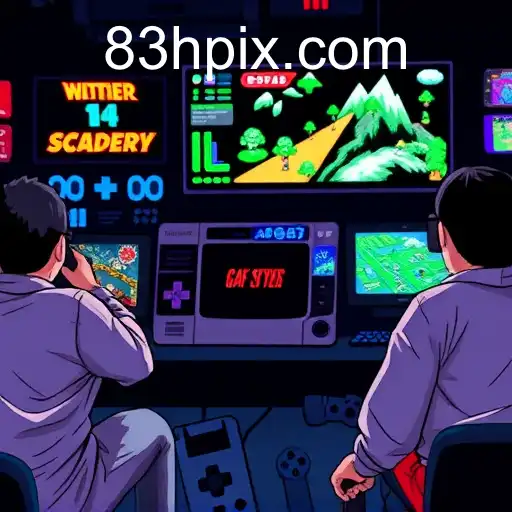
The Evolution of Video Games: Meeting the Demands of the Modern Gamer
Video games have come a long way since their inception. From the simplistic designs of the early arcades to the hyper-realistic virtual worlds of today, the journey has been nothing short of revolutionary. This evolution is often driven by technological advancements, creative minds, and the demands of an ever-growing audience eager to push the boundaries of interactive entertainment. In understanding the current state of video games, one must consider several facets that make up this intricate art form.
The Genesis of Video Gaming
The history of video games dates back to the early 1950s when scientists developed simple games and simulations on computers. However, it wasn't until the 1970s and 1980s that video games began to gain mainstream popularity. Games like Pong and Space Invaders emerged, captivating the minds of young and old alike. These pioneering games set the stage for what would become a multi-billion-dollar industry.001game
The Rise of Home Consoles
The introduction of home consoles transformed the way people interacted with video games. Instead of feeding quarters into arcade machines, gamers could enjoy their favorite titles from the comfort of their living rooms. The advent of consoles like the Nintendo Entertainment System and Sega Genesis in the 1980s brought a new level of quality and creativity to the industry.
The Golden Age of Gaming
The 1990s is often regarded as the golden age of video gaming. With the emergence of 3D graphics, developers were able to create increasingly complex worlds for players to explore. Iconic games such as Super Mario 64 and Final Fantasy VII introduced players to new realms of storytelling and gameplay mechanics. The role of video games in both entertainment and culture began to solidify during this period.
The Impact of Multiplayer Gaming
Another critical development during the golden age was the rise of multiplayer gaming. Titles like GoldenEye 007 for the Nintendo 64 demonstrated the potential of gaming as a social experience. Players could compete against friends, fostering a community that transcended the confines of their homes.E77
The Current Landscape: Challenges and Innovations
Today, video games continue to innovate and expand into new territories. With advances in graphics, artificial intelligence, and virtual reality, games are more immersive than ever before. However, the modern gaming industry faces unique challenges that necessitate even greater ingenuity.
The Role of Indie Developers
While major studios dominate the landscape, indie developers have carved a niche by producing unique and innovative games. Titles like Hollow Knight and Stardew Valley have shown that smaller teams can create deeply engaging experiences that resonate with fans on a global scale. This democratization of game development enables new ideas and fresh creativity to flourish.wg-carnaval
The Emergence of E-Sports
Another phenomenon that has taken the world by storm is e-sports. Professional gaming has evolved into a lucrative industry, with tournaments and competitions drawing millions in viewership and sponsorships. Games like League of Legends and Dota 2 are not only enjoyable to play but also to watch, further blurring the line between games as entertainment and sports.7GGG
Looking Ahead
The future of video games looks promising yet uncertain. As technology continues to advance, the gaming experience will undoubtedly change in unimaginable ways. However, the core principles that have driven the industry will likely remain constant: innovation, creativity, and the relentless pursuit of creating worlds for players to lose themselves in. The evolution of video games serves as a testament to the power and potential of this dynamic medium, as it continually adapts to meet the desires of its audience. To keep up with the latest developments in gaming, one could explore resources and news from platforms focused on this ever-evolving field.
7GGG